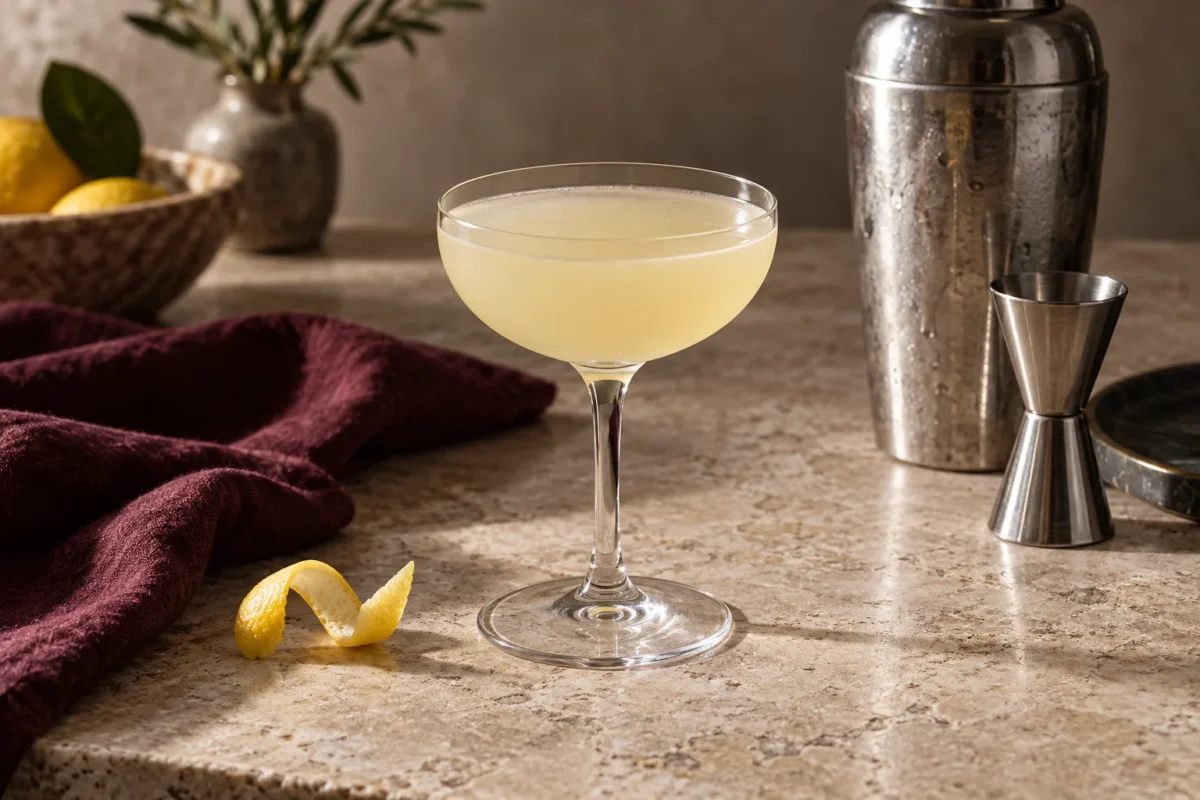
A Gin Sour is a short drink built around gin, lemon juice and sweetener. This version leaves out egg white, making the method simpler and the ingredient list shorter. Expect a citrus-led cocktail without the thick foam associated with an egg-white sour.
Yield: one drink. Preparation: about five minutes. The 50:25:15 gin, lemon and syrup measures are adapted from Beefeater’s published Gin Sour, with egg white omitted and a coupe serving. This adaptation has not been independently kitchen-tested by Sommblog.
Ingredients
- 50ml gin
- 25ml freshly squeezed lemon juice
- 15ml simple syrup
- Ice for shaking
- A small strip of lemon peel, optional
Method
- Chill a small coupe or cocktail glass.
- Measure the gin, lemon juice and syrup into a shaker.
- Add ice, secure the lid and shake until the mixture is cold.
- Strain into the chilled glass, keeping the ice in the shaker.
- Add a small lemon twist if desired and serve promptly.
Why this recipe has no egg white
Egg white is a textural addition, not a requirement for the basic spirit-citrus-sweetener structure. Omitting it avoids a separate dry-shaking stage and produces a different mouthfeel. A thin layer of tiny bubbles from shaking is not the same as a stable egg-white foam.
This guide does not offer an egg or aquafaba substitution quantity. If you want a foamed version, follow a recipe specifically written for it and the ingredient’s handling directions. Do not assume that raw egg becomes safe simply because it is mixed with alcohol.
Balance starts with consistent syrup
Use the same simple syrup strength each time. A rich syrup is more concentrated, so swapping it millilitre for millilitre can make the drink sweeter. Honey syrup adds a different flavour and has its own concentration.
Lemon acidity also varies. If the finished drink seems too sharp or sweet, adjust the next small trial in measured steps. Write down the gin, syrup ratio and lemon quantity. That gives you a repeatable preference rather than a vague instruction to “balance to taste”.
Choose a gin that has a role
A familiar juniper-led gin makes a clear baseline. A citrus-led one may reinforce the lemon; a heavily floral or fruit-flavoured product changes the drink more noticeably. Gin’s botanicals explain why the same formula can feel different between bottles.
A sweetened gin liqueur is not a direct replacement for ordinary gin here. Before adding the full syrup measure, establish what the product already contributes.
How is it different from a Gin Fizz?
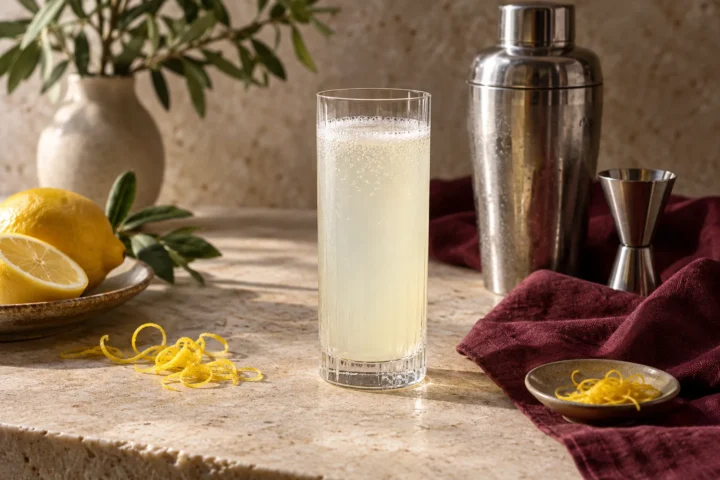
The Gin Fizz finishes with soda and uses its own proportions. Adding soda to this sour is a variation, but it should be done in the glass after shaking, never in a sealed shaker.
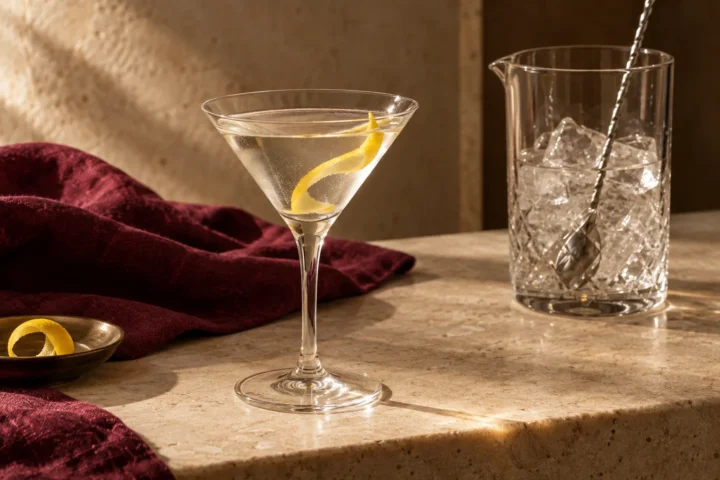
For a spirit-forward alternative with no citrus or syrup, see the Gin Martini. Both drinks reward accurate measurement, but they aim for very different results.
Image: AI-generated editorial illustration, not a photograph of a tested recipe or a reviewed bottle.