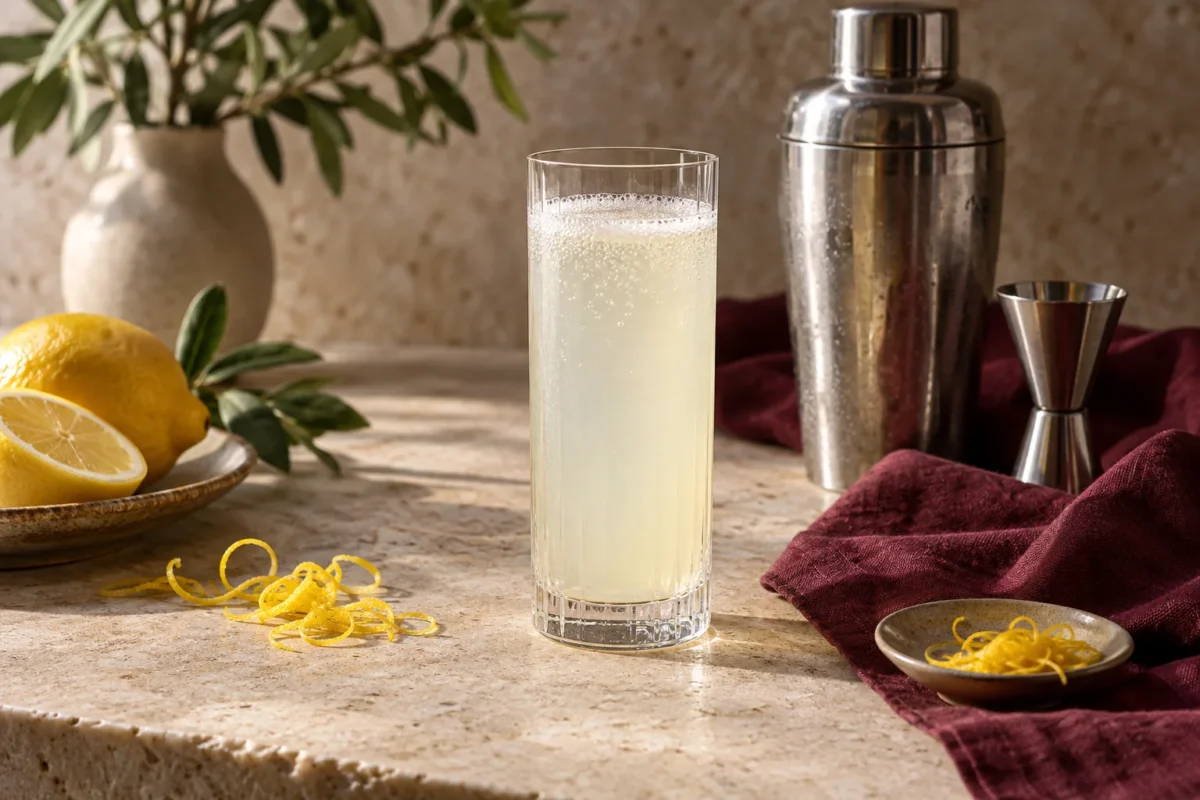
A Gin Fizz combines gin, lemon juice and sugar syrup with a final splash of soda. Shake the still ingredients with ice, then add the fizz in the glass. It is a citrus drink with carbonation, not a gin and tonic with lemon added.
Yield: one drink. Preparation: about five minutes. The starting formula follows the International Bartenders Association’s Gin Fizz, served without ice in the final glass. This is a sourced classic with explanatory notes, not a claim of independent kitchen testing.
Ingredients
- 45ml gin
- 30ml freshly squeezed lemon juice
- 10ml simple syrup
- A splash of chilled soda water
- Ice for shaking
- A lemon slice or twist for garnish
Method
- Chill a narrow tumbler and prepare the lemon garnish.
- Measure gin, lemon juice and syrup into a shaker.
- Add ice, close the shaker securely and shake until cold.
- Strain into the chilled tumbler, leaving the shaking ice behind.
- Add a splash of chilled soda, garnish and serve immediately.
Keep the soda out of the shaker
Shaking carbonated liquid in a closed shaker builds pressure and can make a mess or dislodge the lid. The soda belongs in the serving glass after shaking. Pour gently so the drink keeps its carbonation.
The IBA calls for a splash rather than a fixed volume. Add enough for the sparkling lift you want without filling an oversized glass automatically. If you settle on a preferred quantity, write it down for the next drink.
Check the syrup strength
A recipe’s sugar balance depends on what “syrup” means. Use a consistent simple syrup and record whether it is 1:1 or a richer mixture. Switching to a concentrated syrup without adjusting the measure changes the drink.
Lemons vary too. The listed quantity is a recognised starting formula, not a guarantee that every lemon and gin combination will taste identical. If adjusting, make a small change and record it rather than adding syrup repeatedly without measuring.
Fizz, sour or Collins?
A Gin Sour has the gin, citrus and sweetener structure without a soda finish. A Collins-style drink is commonly a longer, ice-served format. This Gin Fizz follows the IBA’s shorter, ice-free serving convention after the initial shake.
It is also different from a Ramos Gin Fizz, a more elaborate drink with additional ingredients. This recipe contains no egg or cream. Adding either would create a variation with different technique and handling requirements.
Fix the most common problems
Little fizz: start with cold, newly opened soda. Too sharp: check syrup concentration and the lemon measure. Watery: use a suitably sized glass and avoid a large unmeasured soda top-up. Flavour muddled: try a straightforward gin before adding flavoured syrups.
For the base spirit, see what gin is made of. If you want a simpler built drink with no shaker, follow the gin and tonic method.
Image: AI-generated editorial illustration, not a photograph of a tested recipe or a reviewed bottle.