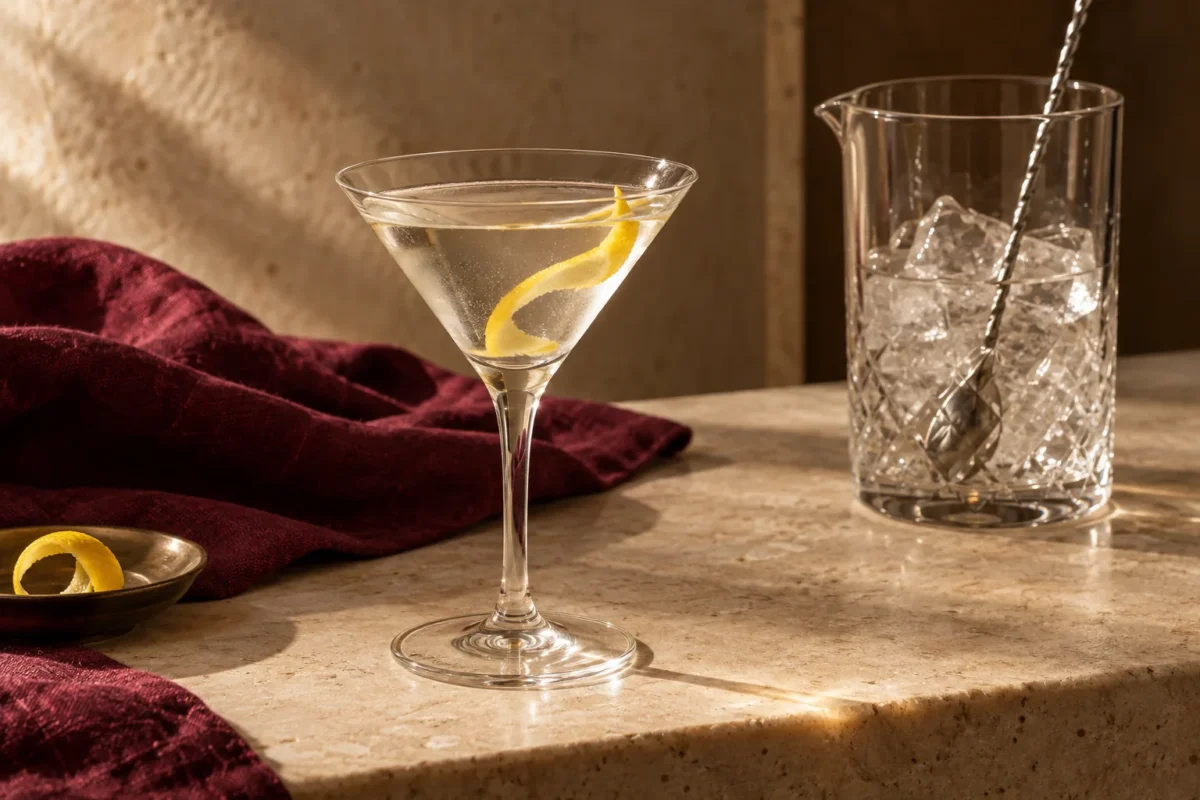
A dry Gin Martini combines gin and dry vermouth, stirred with ice and strained into a chilled glass. The drink is simple enough that each ingredient matters. “Dry” usually signals a relatively small vermouth proportion; it does not mean vermouth has no role.
Yield: one drink. Preparation: about five minutes. This guide uses the International Bartenders Association’s 60ml gin and 10ml dry vermouth formula. The technique notes are original; this is not presented as an independently kitchen-tested Sommblog recipe.
Ingredients
- 60ml gin
- 10ml dry vermouth
- Ice for stirring
- A strip of lemon peel or an olive for garnish
Method
- Chill a small cocktail glass while preparing the drink.
- Measure the gin and dry vermouth into a mixing glass.
- Add ice and stir until the mixture is cold and suitably diluted.
- Empty any chilling ice from the serving glass and strain the drink into it.
- Express a strip of lemon peel over the surface and add it, or garnish with an olive.
Why stirring matters
Stirring with ice does two things: it lowers the temperature and adds water as ice melts. That water is part of the drink’s balance. Simply pouring cold gin and vermouth together does not necessarily reproduce the same result.
There is no single stirring time that compensates for every ice size and starting temperature. Use consistent equipment and note the result. A drink that feels very sharp may need more dilution; one that feels thin may have been diluted too far for your preference.
Understand the vermouth ratio
The 6:1 formula here is one recognised dry style. A wetter Martini uses more vermouth, changing aroma, texture and strength. It is a deliberate alternative, not a mistake. If trying another ratio, keep the total size modest and write down exactly what you changed.
Vermouth is an aromatised wine, so an opened bottle deserves more care than a closed bottle of gin. Follow its storage label and refrigerate after opening where directed. Do not judge the entire Martini style using a long-neglected bottle of vermouth.
Lemon, olive and “dirty” variations
A lemon twist contributes citrus oils. An olive brings a different savoury impression. A dirty Martini additionally uses olive brine, which changes salt, flavour and dilution. Additions should be measured so you can reproduce a version you like.
Sweet vermouth is not the same ingredient as dry vermouth. Nor is a gin liqueur a straightforward substitute for the base gin. A vodka substitution creates a different aromatic balance.
Serve a small drink well
A modest chilled glass helps the Martini stay pleasant while it is being enjoyed. An oversized glass does not require a larger recipe. Serve promptly; the drink will change as it warms.
If you prefer a longer, more refreshing format, the gin and tonic or Gin Fizz offers a different structure. The goal is to choose the style you enjoy, not to make a Martini as dry or strong as possible.
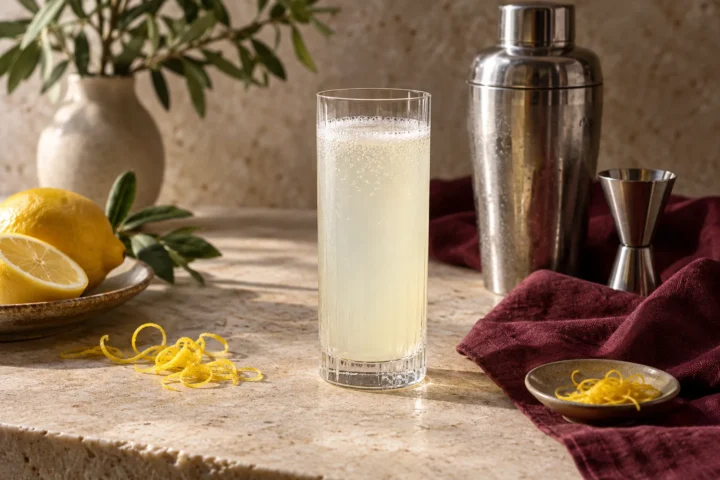
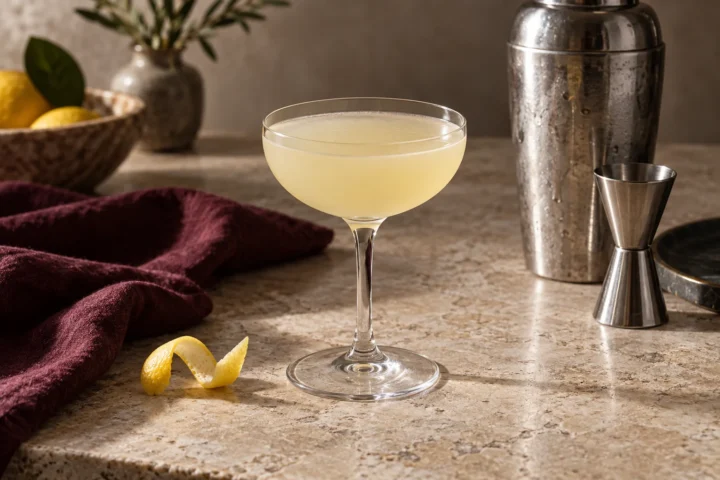
Image: AI-generated editorial illustration, not a photograph of a tested recipe or a reviewed bottle.