If a recipe calls for simple syrup, the closest substitute is a small batch of sugar dissolved in water. Other sweeteners can work, but each changes some combination of sweetness, flavour, colour and texture. There is no universal one-to-one conversion for every bottle and every drink.
First check which syrup the recipe means
A 1:1 syrup and a 2:1 rich syrup have different concentrations. Weight and volume measurements also produce different comparisons. Difford’s Guide’s explanation of simple and rich syrup is useful when a recipe gives only a vague “sugar syrup” instruction.
Our base recipe uses equal weights of sugar and water. If you have those two ingredients, making a little of the intended syrup usually introduces fewer uncertainties than substituting another sweetener.
Compare the main alternatives
| Alternative | What to consider | Practical approach |
|---|---|---|
| Honey syrup | Floral flavour and a ratio that varies by recipe | Record honey-to-water ratio; start with a small measure |
| Agave syrup | Product concentration and perceived sweetness vary | Check the label and adjust gradually |
| Maple syrup | Distinct maple flavour and darker colour | Choose it when that flavour suits the drink |
| Fruit syrup | Fruit, acidity, colour and sometimes pulp | Recheck citrus as well as sweetness |
| Dry sugar | May not dissolve readily in a cold mixture | Dissolve first when the drink allows it |
These are ingredient comparisons, not independently tested substitutions or fixed conversion rules. A branded cocktail syrup may contain flavourings and acids in addition to sugar; read the ingredient list rather than relying on its colour.
Adjust a drink systematically
- Write down the original spirit, citrus, syrup and mixer measures.
- Choose a substitute whose flavour fits the drink.
- Add a smaller measured amount initially, keeping the other ingredients consistent.
- Check balance and increase in small steps if needed.
- Record the final quantities, including any extra water or citrus.
Do not change every ingredient at once. If the substitute is thicker or more concentrated, it can alter dilution as well as sweetness. The water introduced during shaking or stirring is another part of the finished drink.
Useful starting points
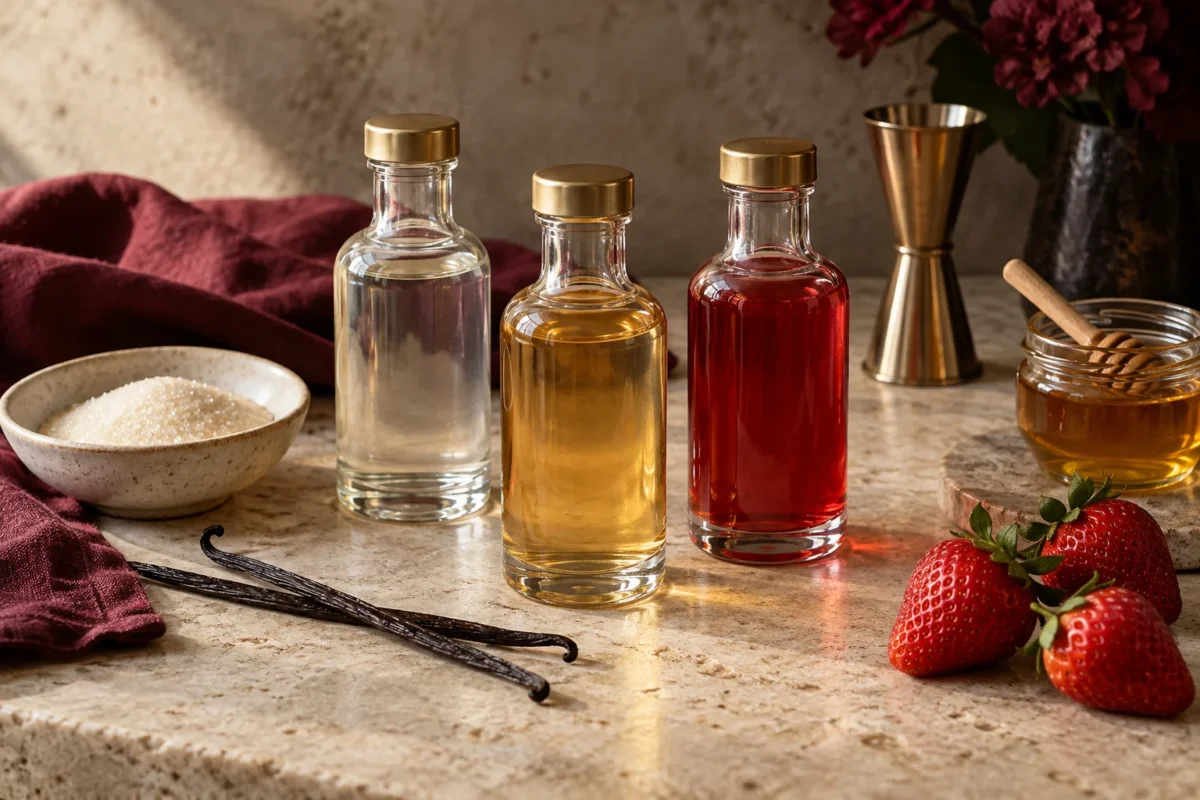
For a measured honey mixture, use our 3:1 honey syrup guide. For fruit flavour, see strawberry syrup. Both bring their own character, so a cocktail made with them should be described as a variation.
If a drink already contains a sweet liqueur or sweetened mixer, adding a replacement syrup without checking the full formula can overdo the sweetness. A Gin Fizz demonstrates a recipe where citrus, sweetener and soda have separate roles.
What about non-sugar sweeteners?
These do not necessarily reproduce sugar syrup’s texture or mixing behaviour. Follow the product’s drink-use instructions and treat the result as a separate adaptation. Do not assume a “zero sugar” label guarantees that a drink will taste the same or that it changes the alcohol content.
Image: AI-generated editorial illustration, not a photograph of a tested recipe or a reviewed bottle.