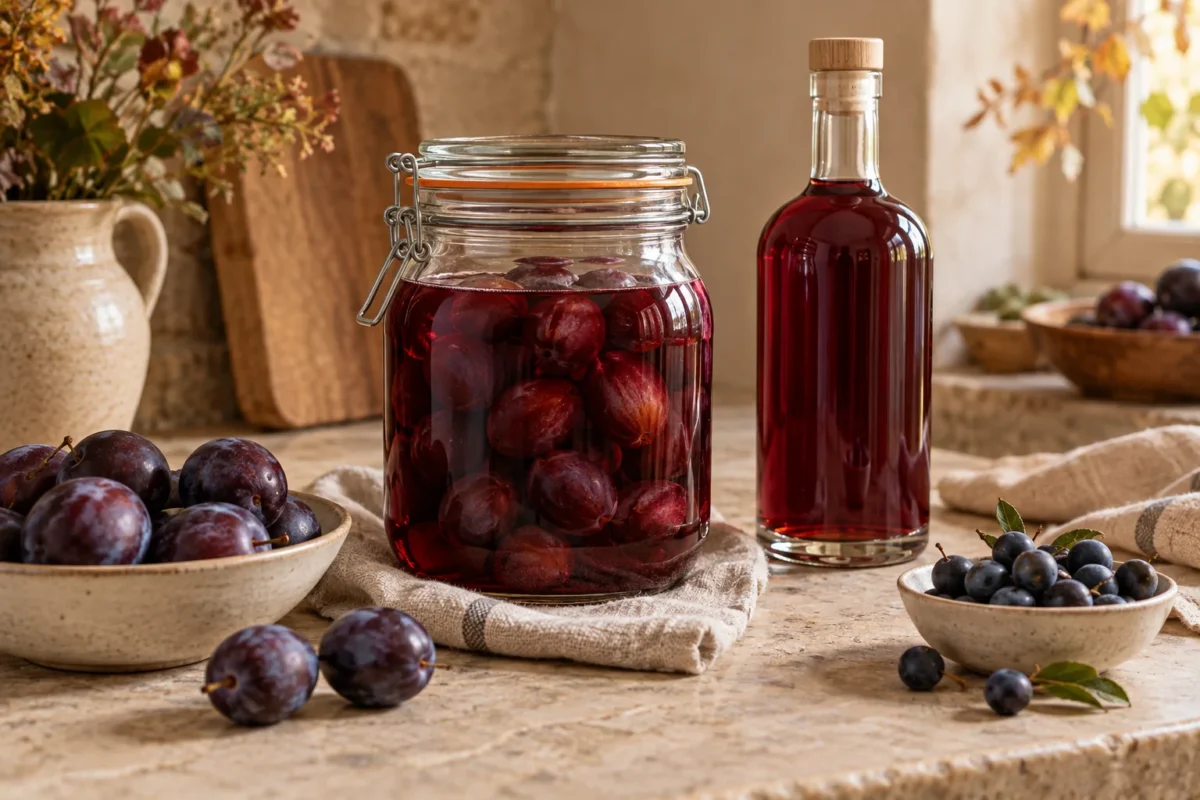
Damson gin combines damsons, sugar and finished gin in a slow fruit infusion. It needs very little day-to-day work, but the steeping period is long. Start with sound, correctly identified fruit and a jar you can close securely.
This guide follows the 300g fruit, 150g sugar and 600ml gin formula from GBC Kitchen’s damson gin recipe. Its three-month method is sourced rather than independently kitchen-tested by Sommblog. The final flavour and yield depend on the fruit and how it is strained.
Ingredients and equipment
- 300g ripe damsons from a reliable source
- 150g caster sugar
- 600ml gin
Choose a clean preserving jar of about 1.5 litres to leave practical mixing space, plus a clean skewer, fine muslin or a food strainer, and bottles with secure closures. Follow the equipment manufacturer’s cleaning guidance. Allow roughly twenty minutes of preparation and three months for infusion.
Method
- Sort the damsons, discarding damaged or mouldy fruit. Remove stalks, wash and dry.
- Prick the skins with a clean skewer, taking care not to crack the stones.
- Put the damsons and sugar in the jar. Pour in the gin and close the lid securely.
- Gently shake to mix. Label with the date and quantities, then store in a cool, dark place for three months, giving the jar an occasional gentle shake.
- Strain through clean muslin into a clean vessel. Transfer to clean bottles, close securely and label with the straining date.
Why the fruit matters
Damsons bring acidity, colour and fruit flavour as well as juice. Different crops do not necessarily behave identically, even when the weights are the same. A more useful first comparison keeps the recipe constant and records the source and ripeness of the fruit.
Do not use this article to identify wild fruit. Purchase damsons from a reliable supplier or obtain qualified identification. Unknown plums or berries are not interchangeable simply because their colour looks similar.
Choose a straightforward gin
A familiar plain gin makes it easier to understand what the damsons contribute. An already sweetened or flavoured product changes the starting formula. Check the label and record both the product and its original strength.
That original strength is not a measured ABV for the completed infusion. Added sugar and fruit alter the mixture. Avoid making strength claims for a homemade batch without an appropriate measurement.
After straining
Let the liquid drain rather than automatically forcing all the pulp through. Pressing fruit changes clarity and texture, so note it if you choose to do so. Measure the finished amount instead of relying on a promised yield.
Keep the bottled infusion securely closed in a cool, dark place. This sourced method is not a validated shelf-life study; it does not justify an indefinite keeping claim. Discard a batch with unexpected growth or deterioration rather than assuming alcohol makes every preparation sound.
For the related smaller fruit, see sloe gin. For a quick non-alcoholic sweetening ingredient that does not require months of infusion, see strawberry syrup.
Image: AI-generated editorial illustration, not a photograph of a tested recipe or a reviewed bottle.