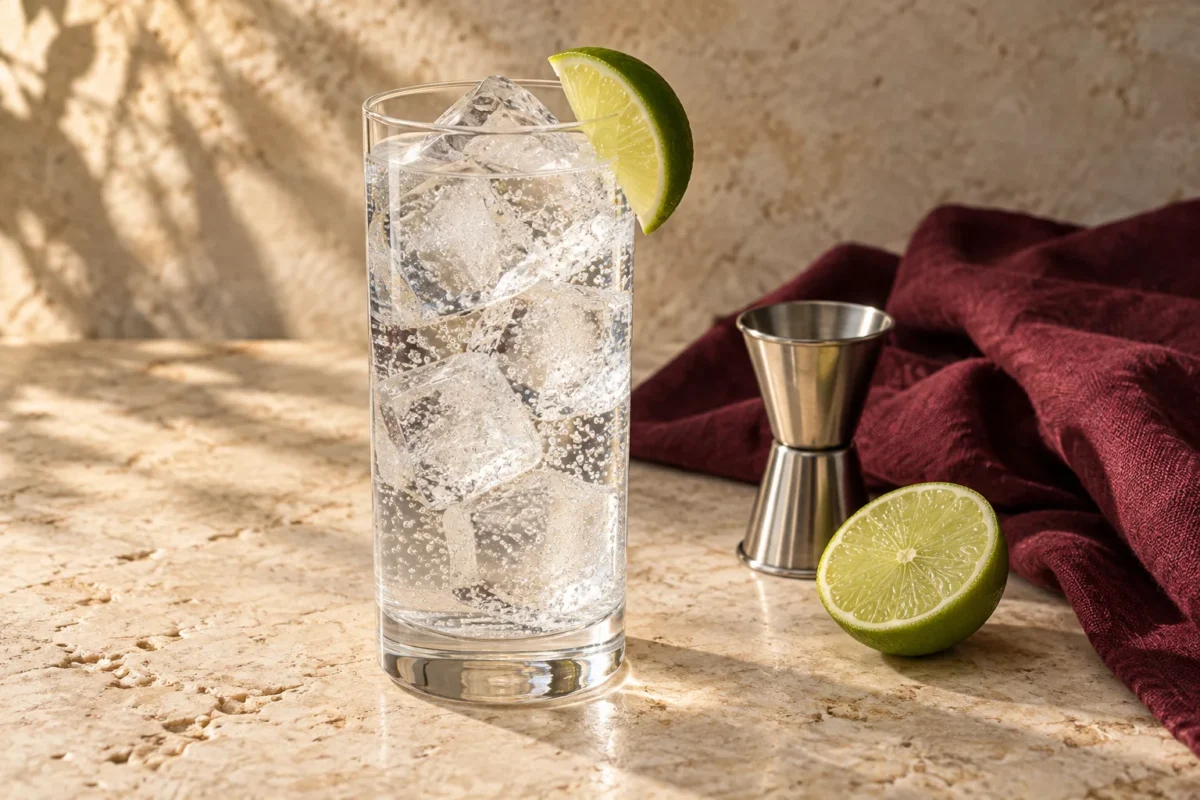
A straightforward gin and tonic starts with a measured gin pour, chilled tonic and plenty of ice. A 1:3 ratio of gin to tonic is a useful, lighter-tasting starting point; it is not the only valid ratio. Choose the balance that suits the particular gin and mixer.
Yield: one drink. Preparation: about five minutes. The measures below follow Plymouth’s published 50ml gin and 150ml tonic serve, with a choice of citrus garnish. This is a sourced method, not a claim of an independent Sommblog recipe test.
Ingredients
- 50ml gin
- 150ml chilled tonic water
- Ice cubes, enough to fill a suitable highball glass
- One lemon slice or a small lime wedge
Method
- Fill a clean highball glass with ice, leaving space to add the liquids without spilling.
- Measure the gin into the glass.
- Open the tonic just before pouring and add 150ml slowly.
- Give the drink one gentle stir to combine.
- Add the citrus garnish and serve immediately.
How to adjust the ratio
For a more prominent gin flavour, you might use less tonic with the same gin measure. For a longer drink, add more tonic. Neither change alters the amount of alcohol you already poured from the gin bottle, although it changes the concentration and total drink size.
If you want less alcohol in the drink itself, reduce the gin measure rather than only adding mixer. A smaller 25ml gin and 75ml tonic version keeps the same 1:3 ratio. These are recipe proportions, not suggested drinking targets.
Choose tonic as an ingredient
Tonic brings bitterness, sweetness and its own aroma. A heavily flavoured tonic can hide a delicate gin, while a very sweet combination can feel unbalanced. Start with a familiar tonic when comparing different gins so there are fewer variables.
Soda water is a different mixer. It can make a useful highball, but it does not provide tonic’s flavour. Likewise, gin liqueur changes the sweetness and strength of the base, so do not assume this formula applies unchanged.
Ice and garnish: keep them simple
Use fresh-tasting ice. Ice that has absorbed freezer odours can spoil an otherwise sound drink. A chilled mixer helps avoid relying on rapid melting to cool warm ingredients.
One citrus garnish is enough to begin with. Squeezing a large wedge adds juice and changes acidity; resting a slice in the glass has a different effect. Avoid adding several herbs and fruits before you know how the gin and tonic taste together.
Troubleshooting
Flat? Use newly opened tonic and stir gently. Too sweet? Check both the tonic and the gin style before adding more citrus. Gin flavour missing? Revisit the mixer ratio rather than automatically increasing the alcohol.
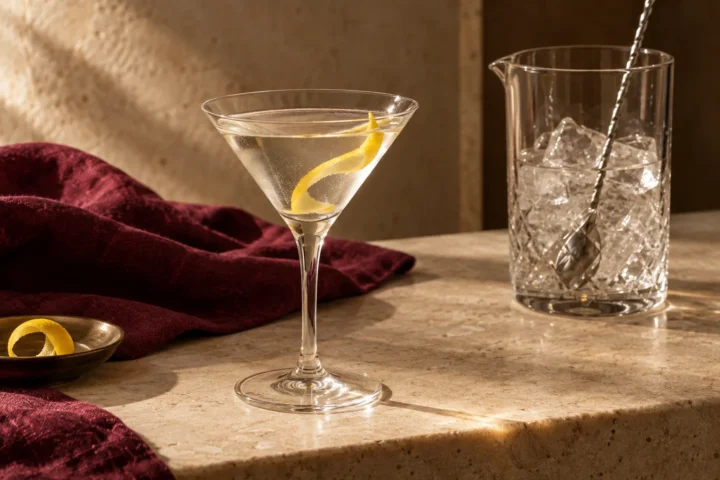
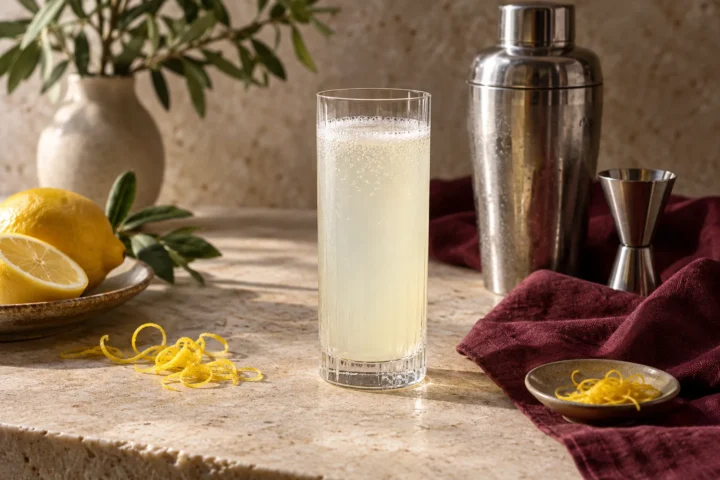
For a different approach to the same spirit, try the Gin Martini or Gin Fizz. To understand the flavours you are working with, start with gin’s botanicals.
Image: AI-generated editorial illustration, not a photograph of a tested recipe or a reviewed bottle.