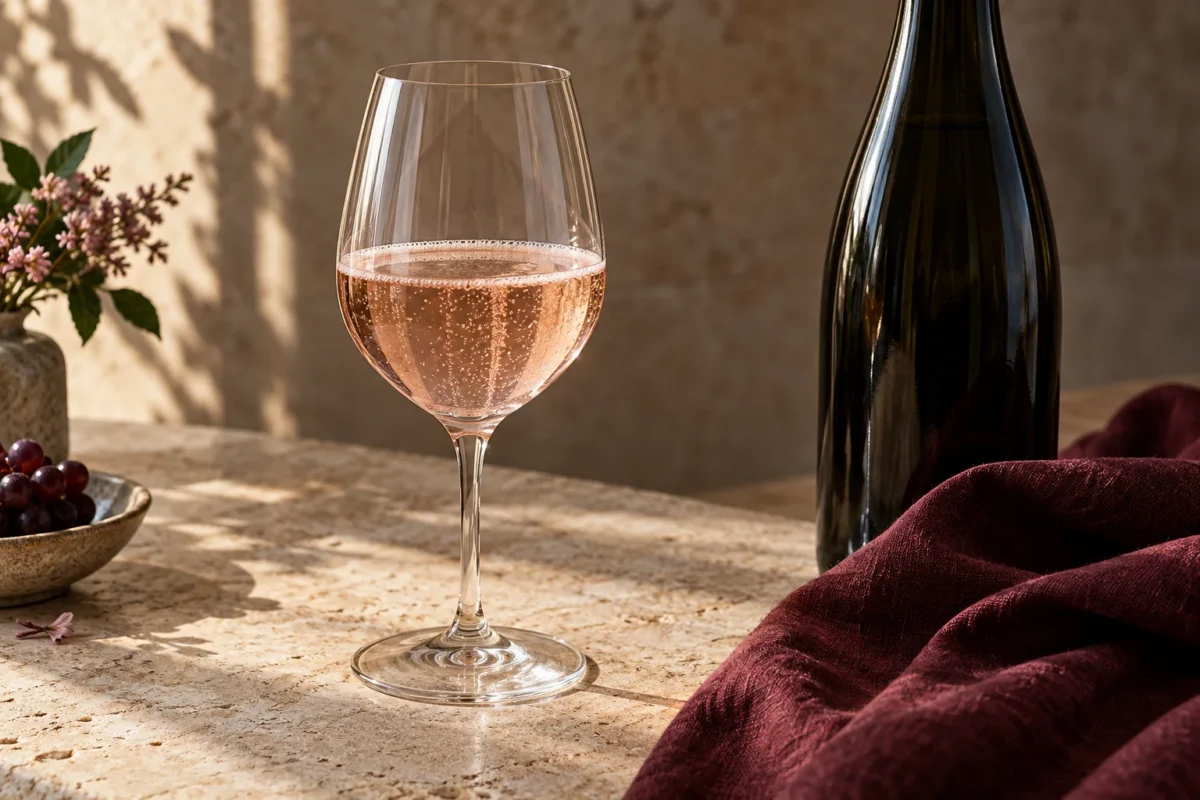
Rosé Prosecco DOC is a pink sparkling wine made with Glera and Pinot Noir under the Prosecco DOC rules. It is not simply any pink Italian sparkling wine. The denomination on the label identifies the wine’s origin and production requirements.
Which grapes give it its colour?
The blend uses 85–90% Glera and 10–15% Pinot Noir vinified as red wine. The red component contributes colour and can add red-fruit impressions. The Prosecco DOC consortium sets out the grape proportions.
That is different from assuming that pink colour comes from added flavouring or that the wine is made entirely from a pink grape. A pale or deeper shade is not, by itself, a measure of sweetness or quality.
What should the label say?
Look for Prosecco DOC and the rosé designation, then the producer and sweetness style. A label that says only “Italian rosé sparkling wine” does not establish that the bottle is Prosecco. The production regulations define the protected name.
Read the whole designation rather than treating DOC and DOCG as interchangeable letters. The pink DOC style belongs to its own rules. For the geographical distinctions behind other Prosecco labels, see Prosecco DOC and DOCG explained.
Is rosé Prosecco sweet?
It depends on the labelled style. Brut and Extra Dry are not synonyms, and Extra Dry is the sweeter of the two sparkling-wine categories. A strawberry-like aroma can suggest sweetness without telling you the residual sugar level.
If you want a drier impression, use the sweetness designation as a starting point and check the producer’s details. Do not choose entirely by colour. The same advice helps when comparing a white Prosecco with a rosé: match sweetness levels if you want to focus on fruit character.
How to serve it
Chill the bottle and use a clean tulip-shaped sparkling glass or a suitable white-wine glass. Avoid overfilling so there is space for the aroma. Our glass guide explains the practical differences between tulips, flutes and coupes.
Keep the bottle cold between pours and reseal it with a proper sparkling-wine stopper if saving some. A wine that has lost its fizz may still smell fruity, but it will not behave like a newly opened bottle in a drink. See how to look after opened Prosecco.
Food and cocktail ideas
Light savoury dishes, simple appetisers and gently seasoned vegetable plates are reasonable places to explore a dry style. Strong sweetness in food can make a dry sparkling wine feel sharper, so a pink colour should not automatically send the bottle to the dessert course.
For mixing, rosé can change both the colour and fruit profile of a Prosecco cocktail. That can be intentional, but use a modest first trial and reassess the sweet ingredients. The bottle’s actual style matters more than the pink appearance.
How does it compare with rosé Champagne?
They have different protected origins and production rules. Pink colour does not erase those differences. Use our Prosecco and Champagne comparison for the broader method and grape distinctions, then check the details of the particular rosé bottles.
Image: AI-generated editorial illustration, not a photograph of a tested recipe or a reviewed bottle.