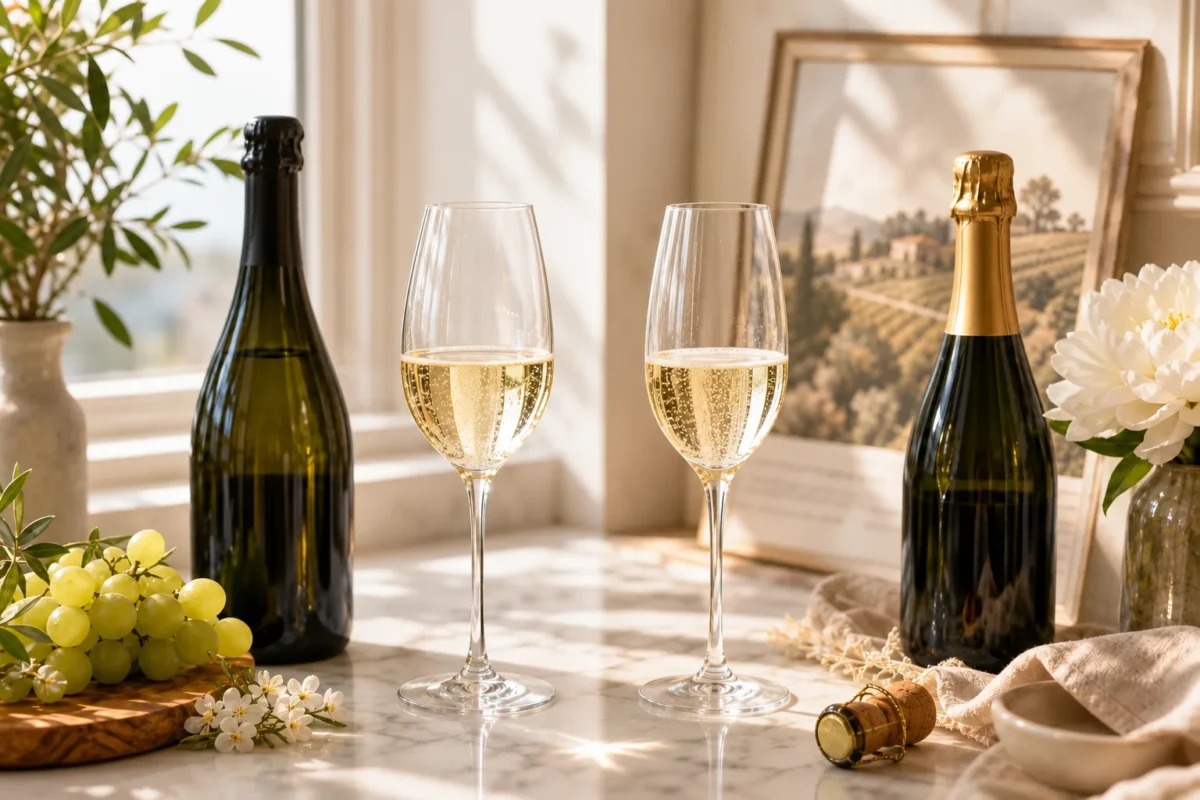
A tulip-shaped sparkling-wine glass is a useful choice for Prosecco: it gives the wine some room while narrowing towards the rim. A clean, moderately sized white-wine glass is also practical. You do not need a separate branded glass for every sparkling wine.
Why a tulip is a good starting point
The Prosecco DOC consortium recommends a fairly generous tulip glass. Its shape lets you explore aroma without the very open surface of a coupe. The recommendation is about enjoying the wine, not a claim that another glass makes the bottle unusable.
Use a modest pour with room above it. Filling any glass to the rim makes carrying it awkward and leaves little space to assess the aroma. Glass capacity and the amount you choose to pour are separate things.
How the common shapes compare
| Shape | Useful qualities | Limitations |
|---|---|---|
| Tulip | A bowl with space and a narrowing opening | Some designs are delicate or awkward to wash |
| Flute | Compact, familiar and visually focused on bubbles | A very narrow bowl gives less room to explore aroma |
| Coupe | Broad, accessible shape with a distinctive look | An open surface and shallow bowl make it less practical for preserving fizz during slow drinking |
| White-wine glass | Versatile and often already in the cupboard | A very large bowl can encourage oversized pours |
What if you only have flutes?
Use them. A clean flute with a chilled, freshly opened wine is a sensible starting point. If you are curious about aroma, compare the same wine in a flute and a small white-wine glass. Keep the quantity and temperature similar so the shape is the main variable.
Do not infer wine quality from the number or size of bubbles alone. Glass condition, surface features and the way the wine is poured can affect the display. A dramatic stream of bubbles is not a reliable quality score.
Cleaning matters more than decorative detail
Check that glasses are free from lingering detergent, cupboard odours and greasy marks. Follow the manufacturer’s cleaning advice, especially for delicate stems. A visually spotless glass that smells of a cupboard will still interfere with the wine.
Hold a stemmed glass by the stem or base when convenient. That keeps fingers away from the bowl and makes it easier to compare samples without warming them differently. Comfort and stability matter too, particularly around a crowded table.
Serve the bottle as carefully as the glass
Use the serving-temperature guide to chill the wine, and pour gently. Keep the remaining bottle cool between pours. If there is wine left, use a proper sparkling stopper rather than relying on a spoon in the neck.
Our opened Prosecco guide covers keeping the remainder. For a tasting, compare Prosecco and Cava in the same glass shape; otherwise you may mistake a serving difference for a difference between the wines.
Image: AI-generated editorial illustration, not a photograph of a tested recipe or a reviewed bottle.