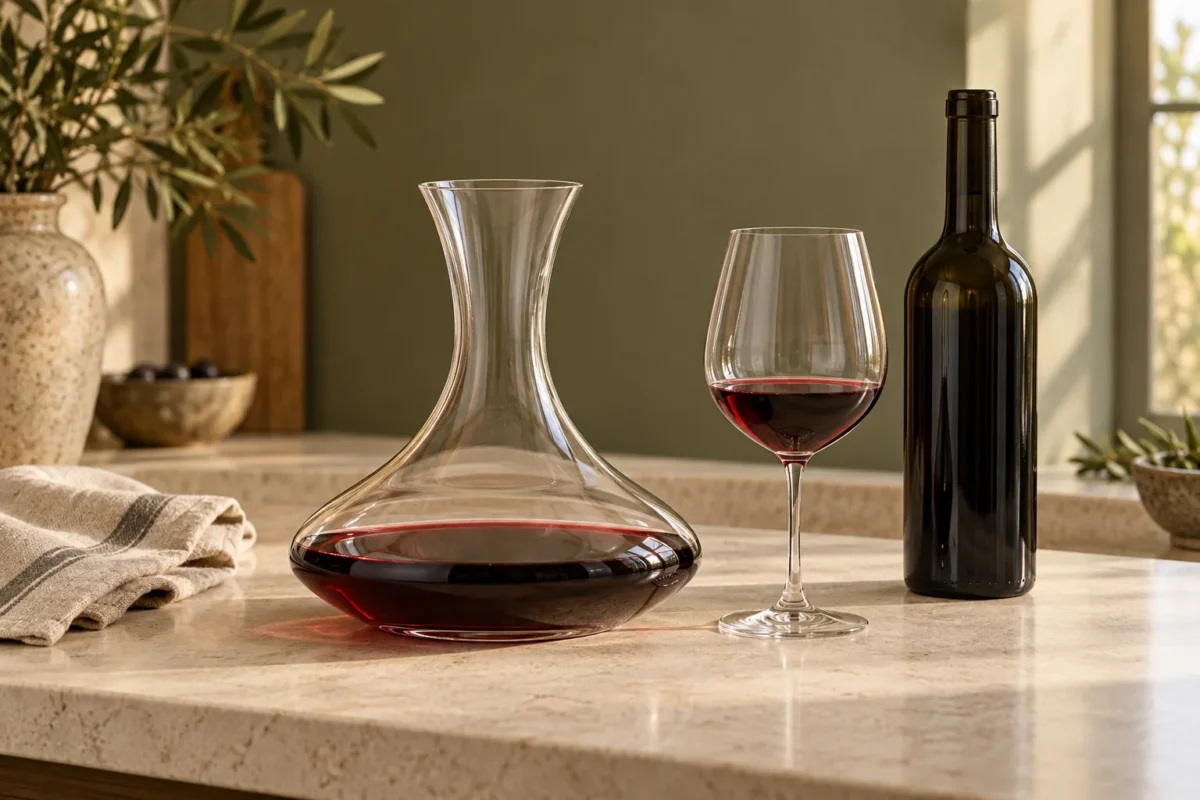
Decanting means transferring wine from its bottle into another vessel. It can separate clear wine from sediment or expose the wine to more air. Those are different purposes, and neither makes decanting compulsory for every red wine.
Decide what you are trying to do
If a bottle contains a visible deposit, gentle pouring can leave that deposit behind. If the wine is clear but seems reserved, you may want to explore how air changes it. Start with a small sample in a glass before committing the entire bottle.
WSET’s decanting guide distinguishes sediment removal from aeration and notes that the benefit of aeration is debated. A wine can change with air without necessarily becoming better. The useful question is whether you prefer what happens.
What equipment do you need?
A clean, odour-free glass decanter is convenient. For straightforward transfer, a clean glass jug can work too, provided it is suitable for food and easy to pour from. Avoid vessels with detergent smells, lingering food aromas or an awkward lip.
You also need a good light source and somewhere stable to work. A small torch is easier to control than a candle. If sediment is present, handle the bottle gently from the start so you do not disperse it through the wine just before pouring.
A gentle method for a wine with sediment
- Inspect and prepare. Keep the bottle steady and give disturbed sediment time to settle before you begin.
- Open carefully. Remove the closure without unnecessary shaking and wipe the neck if needed.
- Watch the neck. Position the light so you can see the moving wine and any deposit.
- Pour slowly in one controlled movement. Avoid repeated tipping back and forth.
- Stop before sediment reaches the vessel. Leave the final sediment-heavy portion behind rather than trying to recover every drop.
If the wine turns cloudy while you pour, stop and let the remaining bottle settle again. A modest loss of wine is preferable to defeating the purpose of the transfer.
How long should wine breathe?
There is no reliable universal timetable by grape or price. The bottle’s age, condition, style and your taste all matter. Begin close to serving time and compare a small sample as the wine changes. A fragile older wine may lose attractive aromas with prolonged exposure.
For a young wine, try swirling a sample first. If that provides the change you wanted, the bottle may not need a decanter at all. Avoid presenting “two hours for every red” as a rule: it can be unhelpful for one wine and excessive for another.
Can you decant white or sparkling wine?
White wine can be decanted for a specific reason, such as separating a deposit, but it is not a required step for Chardonnay or any other grape. Keep the wine’s temperature under control while deciding whether the transfer helps.
Routine decanting is a poor default for sparkling wine because retaining fizz is usually part of the goal. Serve it in an appropriate glass instead unless the producer gives a specific reason for a different approach.
After the meal
A decanter is a serving vessel, not a long-term storage system. If saving still wine, transfer it to a suitable clean container, close it and refrigerate it. Our wine storage guide covers that decision separately from serving temperature.
Image: AI-generated editorial illustration, not a photograph of a tested recipe or a reviewed bottle.