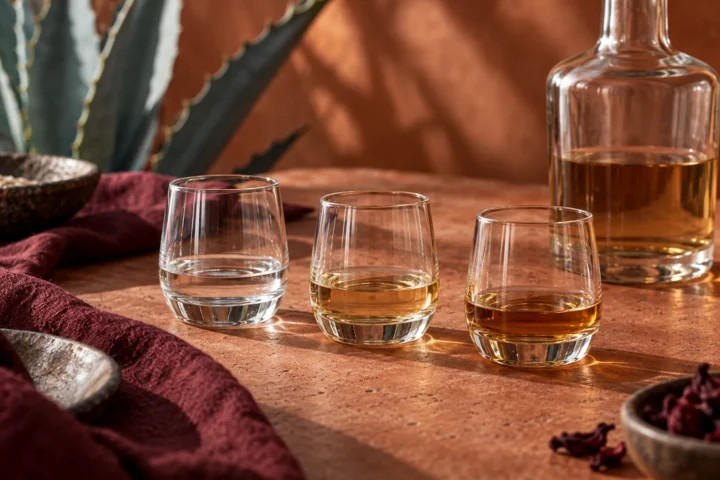
Tequila has five recognised classes: blanco, joven, reposado, añejo and extra añejo. These describe maturation or blending. They are separate from the two sugar-origin categories, tequila and 100% agave tequila, so both kinds of information can appear on one label.
The five classes at a glance
| Class | What it means |
|---|---|
| Blanco or plata | Transparent tequila; the standard permits less than two months in oak containers. |
| Joven or oro | A class covering blending or permitted adjustment; a gold colour alone does not establish long ageing. |
| Reposado | At least two months of maturation in direct contact with oak. |
| Añejo | At least one year in oak containers no larger than 600 litres. |
| Extra añejo | At least three years in oak containers no larger than 600 litres. |
These points come from the Mexican tequila standard. They are minimum or defining conditions, not a promise that all bottles in a class spend exactly that long in wood. Blends have additional rules; check a producer’s information before treating a marketing description as an exact age statement.
Blanco: a useful starting point
Blanco is a good place to explore how a producer presents agave character without the extended wood maturation of aged classes. It does not automatically mean harsh, simple or cheap. Production choices and bottling strength still matter.
For a citrus-led mixed drink, it is often the most straightforward starting point because many recipes specify it. That is a recipe choice rather than a judgement that aged tequila cannot be mixed. See the tequila cocktail guide for different styles of serve.
Reposado, añejo and extra añejo
Time in wood can introduce or emphasise vanilla, spice, toasted and other maturation-related impressions. The effect depends on the cask, its previous use and the spirit itself. A reposado from one producer may not resemble another closely.
Longer ageing is not a universal quality ladder. Someone who enjoys a fresh, peppery agave profile may prefer a blanco; someone seeking a more prominent wood influence may prefer an aged expression. Start with the flavour goal rather than assuming the oldest label must suit everyone.
Where does cristalino fit?
Cristalino is a presentation term associated with filtered tequila, often aged tequila whose colour has been reduced. It is not a sixth class in the official list. Look for the underlying recognised class on the label and the producer’s explanation of how the bottle was made.
This is one reason colour is a poor shortcut. A clear-looking bottle can still have an ageing history, while “gold” does not by itself tell you how long the spirit matured.
What about 100% agave?
That statement answers a different question: where the fermentable sugars came from. It is not an ageing class or an ABV figure. The blue agave guide explains it in detail; the CRT label requirements show how categories and classes are presented.
Make a useful comparison
If you want to compare classes, choose bottles from one producer where possible and use modest samples in similar glasses. Record aroma, texture and the balance between agave and wood impressions. Keep water available and do not turn completing the comparison into a drinking target. The objective is to understand your preference, not to prove that one class always wins.
Image: AI-generated editorial illustration, not a photograph of a tested recipe or a reviewed bottle.