Tequila is made from blue agave, specifically Agave tequilana Weber blue variety. Producers process the plant’s central heart to obtain fermentable sugars, ferment the material and distil it. Tequila is a protected Mexican spirit, not a generic name for any drink made from agave.
The heart of the plant, not the leaves
The harvested agave heart is commonly called a piña. Its resemblance to a large pineapple explains the name, but it is not pineapple fruit. Agave is also not a cactus. The long leaves are removed during harvesting so the heart can be processed.
The Consejo Regulador del Tequila’s production guide explains the sequence from field to bottle. Processing releases sugars, fermentation produces alcohol, and distillation concentrates and shapes the spirit. Those are distinct operations; simply soaking agave in alcohol would not produce tequila.
What does “100% agave” mean?
It describes the origin of the fermentable sugars, not the percentage of alcohol in the bottle. In the 100% agave category, those sugars come entirely from blue agave. The broader tequila category requires at least 51% of the sugars to come from blue agave; permitted other sugars can supply the remainder.
The actual alcoholic strength is the ABV on the label. A bottle marked 100% agave can still be 40% ABV, for example. Water used to adjust bottling strength does not contradict the sugar-origin statement. Neither does ageing in a barrel.
From agave to blanco or aged tequila
After fermentation and distillation, choices about maturation and blending lead to different classes. Blanco, reposado and añejo are familiar examples. They describe a different dimension from “100% agave”: one label can tell you both the sugar category and the maturation class.
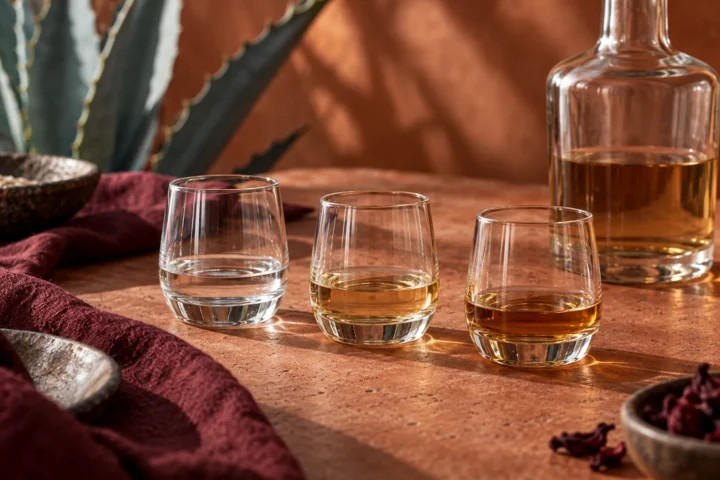
Do not use colour alone to identify the class. A clear-looking spirit is not necessarily proof that it has never seen wood, while a golden appearance does not tell you the exact time spent ageing. Read the named class, then consult the producer if the presentation is unusual. Our tequila types guide separates the terms.
Why bottles made from the same plant taste different
A single allowed agave variety does not mean one flavour. Farming, the condition of the harvested plant, processing, fermentation, distillation and maturation all give producers choices. Bottle strength changes the experience too.
That makes “agave-forward” more useful as a flavour description than a guarantee of a fixed taste. Pepper, cooked-plant, citrus, herbal or barrel-derived impressions may appear in tasting descriptions, but they are not a checklist every tequila must satisfy. A producer’s technical information is more helpful than guessing from bottle shape or price.
A useful label-reading order
- Find the word tequila and the producer’s identifying information.
- Check whether the category says 100% agave.
- Read the class, such as blanco or reposado.
- Check ABV and bottle volume separately.
- Choose a style that fits the drink you want to make.
The CRT’s label guide shows the information a tequila label must carry. For practical next steps, compare tequila and mezcal, or use the measured Tequila Sunrise recipe. Neither an impressive age statement nor 100% agave is a substitute for choosing a flavour you enjoy.
Image: AI-generated editorial illustration, not a photograph of a tested recipe or a reviewed bottle.